Miss Lonelyhearts - Nathanael West

As a “professional reader”, I should be able to read books and review them objectively. Leave out my personal life and ideas and look at how the book is written. Even though reviews are always biased, we should strive to make it as unbiased as possible.

misslonelyhearts.jpg

This week, I didn’t succeed at this – sometimes I read a book that parallels with my life so much at the time, that the lines become blurred. Miss Lonelyhearts by Nathanael West was one of those books that seemed to perfectly describe someone in my life this week, which made me possibly dislike the book more than is justified. This served as a fair warning, so that you know why I hated the character of Miss Lonelyhearts.

The book trails the life of a man who works as Miss Lonelyhearts in the 1930s. He works at a newspaper and answers letters from people who are desperate. This is an era for pain and suffering in New York City and the column is widely popular with these people. They believe that they can be saved if they follow the advice of Miss Lonelyhearts. He always writes general responses in his column that discuss how belief in God would save them, without much care to any specific letter or person. Just general God talk.

However, for someone who was hired to write letters that are supposed to comfort people, Miss Lonelyhearts is a pretty insensitive, rude and egotistic person. The book is written from the point of view of Miss Lonelyhearts, which usually helps the reader relate to the character. Often, the main narrator is also the character we relate to the most. In this case, I found every single other character, which were all very minor due to the short length of the story, more likeable than the narrator. Miss Lonelyhearts is depressed because he hates his job. He hates reading about people’s problems, he hates communicating with people, he hates life and should be the one writing letters to someone else.

So the story is basically him moaning about his job and life, yet not being able to quit his job. If I would summarize him, I would call him lazy and without backbone (which is why he reminded me so much of someone I know).

However, besides my clear irritation of the personality of the main character, the writing in this book is amazing. Nathanael West was a buddy of F.S. Fitzgerald and they are very similar in their way of writing. West uses original comparisons and knows how to push a story forward without making it feel rushed. The story is short, yet there seems to be a lifetime of information about Miss Lonelyhearts in it.

Furthermore, the story is original. I was waiting for the moment Miss Lonelyhearts would see the light and marry his sweetheart and find his happiness. I don’t want to spoil it for anyone, but Nathanael West makes the story more interesting than that and the ending took me by complete surprise – which is always a plus in my book.

Maybe West’s most important strength is that he can write a character as irritating as Miss Lonelyhearts and have people still finish the book. No one deals willingly with those people in real life, however the beauty of the writing keeps readers willing to deal with Miss Lonelyhearts.
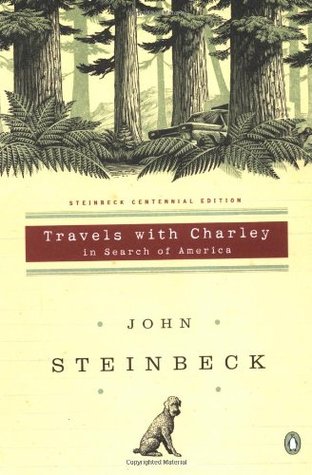
Travels With Charley - John Steinbeck

Give me any book with a dog on the cover and I’ll read it (except for Marley and Me, because I actually like my heart in one piece, thank you very much).

So when my travel writing teacher asked the class to read a travelogue, I couldn’t resist picking upTravels with Charley by John Steinbeck. I’m a fervent Steinbeck fan and the combination of his amazing writing talent with a dog is what drew me in. Added to that, I dislike travelogues and just wanted something that I knew I could at least admire for the writing.

Life is not a fairy tale and Travels with Charleydid not make me fall in love with the travel-writing genre. It is a great read, but that’s because Steinbeck is so ridiculously talented with story telling. No one can tell a story like that man and that’s what made the book great.

The plot is fairly simply; a man and his dog take a home on wheels and drive around America to satisfy the wanderlust of the man. Highlights are the first few chapters, where Steinbeck explains not just his love for travel, but the need he feels for travel. As a traveller myself, those chapters felt like he had looked inside my soul and put my thoughts into words that are far beyond my talent.

The journey is described by landscapes and people and the reaction of his dog Charley to both of those. That makes this travelogue original – it’s not just what Steinbeck is feeling, but it’s about what the dog is feeling and what this might mean. It also makes it an amazing read for dog owners, like myself, because you can recognize the reactions of Charley and it makes you want to grab your pet and cuddle him. Without giving too much of the plot away, the journey throws Steinbeck several curveballs and he experiences things that were unexpected for him – and thus are also unexpected for the reader.

Is it a life-changing journey? No, it’s not. So is the book life-changing? No, it’s not. But it’s a fun, easy read and it will help future writers develop their use of language and the building blocks of a good story.

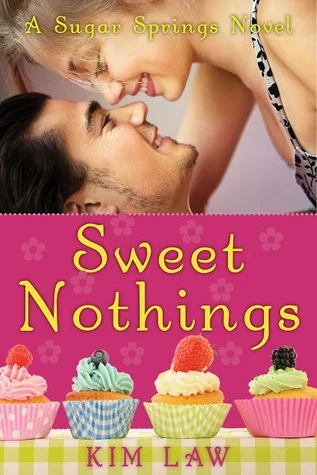
Sweet Nothings - Kim Law

Joanie Bigbee and Nick Dalton are polar opposites in every way. She is wild, untamed and unable to settle down – jobwise and relationship-wise. He is calm, a “house mouse” and eager to settle down as fast as possible. They fall in love, but are faced with a number of issues such as the health of Joanie’s grandmother, Nick’s complicated past and the constant rumours started by the people that live in their small town.

The novel is a story about how nothing in life can be planned, because unexpected events will always change our lives in unexpected ways. The author emphasizes this by having a double narrative in her story. The reader knows the point of view of Nick and Joanie and this helps to understand the struggles the main characters have to go through before they can be happy. Though the double narrative expands the story compared to the average chicklit book, in which we only know the struggles of the female protagonist, it also eliminates the element of suspense in the love story. 

The feelings of the main characters for each other are known at every point of the story and so the reader never really has to wonder whether or not the characters will end up together. Kim Law tries to compensate this by letting the main characters interact a lot with minor characters, of which the reader does not know the perspectives. Those smaller personas often are the core of the unexpected events that change the lives of Joanie and Nick.

The author taps into the 50 Shades of Grey audience by including many explicit sex scenes in the book. Though they do not move the plot forward in any sort of way, they will be a delight to any reader who loves the Grey trilogy.

The writing style of the author is an easy one to read, though often filled with cringe-worthy clichés such as “A man who’d set her engine on purr” and “Captivating eyes, the color of storm clouds on a late-summer day”. However, there are not too many for it to overtake the plot line.
Overall, Sweet Nothings is a decent read. It will make you laugh at times, but it is pretty predictable, especially because of the double narrative, and there are better chicklits out there.

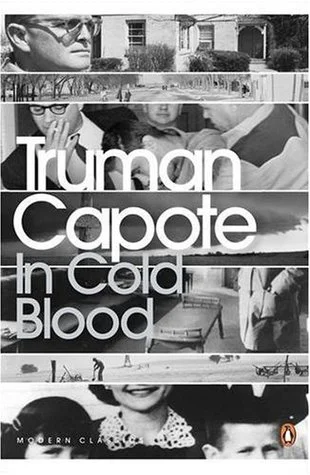
In Cold Blood - Truman Capote

In Cold Blood should be on the curriculum of every single journalism course.
I’m not the first person to make this statement and there is no doubt that I always won’t be the last. But I feel so passionate about this book that I just have to say it, on my blog, to people I meet, to strangers on the tube.
If you love writing, you need to read this book and I secretly hate myself for waiting almost 24 years to read it.

The obsession with killers is still as alive as it ever was. Jake Evans, who murdered his mother and sister, has a fanclub on Tumblr, because he is “misunderstood”. London is constantly naming murderers the new Jack the Ripper in the hope that they will find a story as juicy as Jack again. People love reading and hearing about murders, and the more gruesome the better. The more we can say “Oh God, who would do that? What’s wrong with him?”, the more we read to find out.

And that’s exactly what Capote figured out for his novel: people want to read about murders and know why someone would do that. This information is almost never gathered from newspaper reports, which have to stick to being objective and formal.
Novels on the other hand can explore a range of things that are informal, subjective and great to read. Combining the two meant that Capote found the goldmine of literature.

The book starts off by describing the Clutter family, an ordinary Kansas farming family, that does things we can all imagine ourselves doing; working, romancing, struggling with life and family. However, they are also more kind than most of us are, which strikes a chord with the reader – they are the kind of family you would love to have as your neighbor.

Until they get gruesomely murdered by two men. One, Perry, is thoroughly introduced at the beginning of the book as a nice and misunderstood intelligent man. The other one, Dick, is only seen through the eyes of Perry and scares the reader from the beginning. Something is off about Dick and we all hope and pray that Perry realizes this before they actually commit the murder they talk about.

Without spoiling the book too much, a lot of the tables turn. The murder is not the spoiler, since most people already know the basic outline of the Clutter case. The spoilers are the way the characters are described and the way they evolve.

Capote’s description of the murder of the family might be the most chilling thing you will ever read. It is vivid, without being over the top, and you can imagine it happening to you – which is only reinforced by the fact that the reader knows it is a true story. The murders turn out to be completely different people than you suspected in the beginning and then they are the same again and then they change again… A reader is constantly torn between rooting for them and absolutely despising them.

It won’t be a spoiler to say that almost no characters in the book survive, which makes it really sad to say goodbye to this book. You are introduced to such a wide range of characters, some good, some bad, but all of them so very human that you can’t help but relate to them. And then you close the book and they are all gone. It drained me from my energy for the rest of the day and I needed a night of sleep before I could think about writing a review.

In Cold Blood is a must-read for everyone who loves writing and wants to learn how to write, but prepare yourself emotionally. Capote takes the reader on a rollercoaster ride and makes you doubt what’s right and what’s wrong about the criminal system, life and yourself.

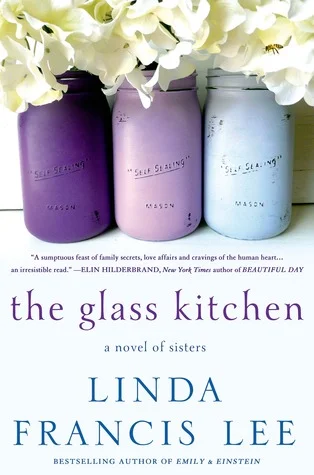
The Glass Kitchen - Linda Francis Lee

I’m Mrs. Take-away. I don’t see the point in cooking and I honestly think that modern day’s obsession with cooking and food is absurd and freaky.

However, as I’ve mentioned before, I’m also the girl that picks books purely on their cover and thus I ended up reading the book The Glass Kitchen (really Emma, you missed the word Kitchen in the title?) by Linda Francis Lee. I requested this book via Netgalley, because I loved the cover so much.

The Glass Kitchen is the story of Portia and Ariel – a story that intertwines at several points during the plot.

Portia is a newly divorced Texan woman who moves to New York City to find herself again. She lives in the townhouse her great aunt used to own – she lives on the garden floor while her sisters, Olivia and Cordelia, used to own the other two floors. However, the sisters sold their part of the house, so Portia unwantedly becomes a neighbor of Gabriel, a handsome, but very cold, businessman.

Gabriel is a widower with two daughters – Ariel and Miranda. The story of the family focuses on 12-year-old Ariel, who is struggling with the move to New York (the family used to live in New Jersey) and the teenage escapades of her sister (who is 16). And mostly with the fact that she was in the car crash that killed her mother.

As if that’s not enough plot, there’s an interesting twist to the story. Portia has “the knowing”, which is a family trait that allows her to see the food people will need before they actually need it. For example, Miranda runs into the house needing 20 cupcakes for a bake sale and Portia already made them, though she didn’t know why. Olivia’s grandmother used to have the trait, which is why her restaurant The Glass Kitchen in Texas was so successful. Imagine walking into a place and them always having the food you love? As a Mrs Take-away – I’ll sign up for that.

That’s where the story starts and slowly the characters develop and have to figure out how to survive, both financially and emotionally after the traumatic event of an unexpected divorce or the death of a mother, in the case of Ariel.

What I liked about this book is that Portia is not your typical Texan narrator – yes, she likes to cook and yes she wears sparkly clothes every now and then, but she’s feisty and actually doesn’t want to hook up with her neighbor for a very long time. Same goes for Ariel, who is not the typical 12 year old narrator. She’s smarter than most girls her age, which saves the book from not falling in between the young adult and adult category – it’s definitely adult, even when Ariel narrates. “The knowing” brings in an original element to the book, which differentiates it from most chick lit like books. It also causes for quite a few surprising turns and twists in the book, which is always a plus in my eyes.

What bothered me about this book is the development of Miranda. Miranda is 16, the older sister of Ariel, and is very clearly struggling with the death of her mother. However, the author portrays her as an annoying brat who is acting out in every way possible. But WHY? Nobody knows and at times, I even wondered if the author really knows why Miranda is acting the way she does.

She hangs out with bad friends, smokes weed and throws parties even though she’s not allowed to do that. As a reader, we hear repeatedly how good she was back in New Jersey and how the move made her upset. Really? The move? I think the death of the mother could have come back in here and I really missed this part of the story.

Besides that though, it is a good read. I feel like the lack of Miranda character development really left a gaping hole in the plot, but for any cooking lovers, this will be a fun and enjoyable read. And even if you don’t enjoy cooking, like me, you can still enjoy this book and maybe even get motivated to do some cooking of your own – with the recipes in the back of the book!

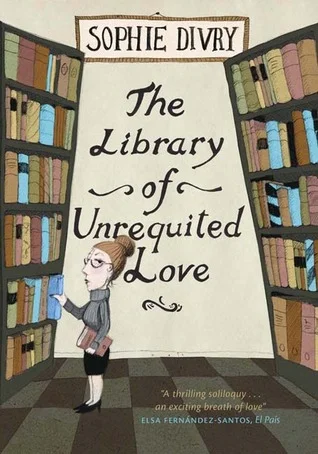
The Library of Unrequited Love - Sophie Divry

There are some books that I instantly love - some books that I instantly hate (I never really finish those, bad habit alert) and then there are books like The Library of Unrequited Love by Sophie Divry. Is it a bad book? Not really. Is it a good book? Not really.

It’s short and easy to read and “meh”.

The story is just a monologue from a female librarian talking to an unknown man who spend the night in the library. I think it’s always impressive when someone creates a whole book (fine, 80 pages, but it’s still a book!) with just a monologue. No real action, no movement, just someone’s inner thoughts.

But I have to wonder - why is the female librarian, who’s biggest fault is that she’s slightly socially awkward, chosen as the main character when there is a man/boy/guy/whatever who spend the night in a closed library?

What was he doing there? Is he homeless? Or did he just fall asleep? Usually I write long reviews, but this book is so short that I don’t really have much to say. There are a lot of good quotes in the book, which is a good thing, but also became kind of annoying. Who talks in perfect quotes when you are just rambling?

Do you want an insight into a French librarian with failed dreams? Then buy this book. Do you want a quick read to finish your Goodreads challenge? Then buy this book. Do you want a great writing prompt for the male character? DEFINITELY buy this book then. Otherwise, don’t bother.